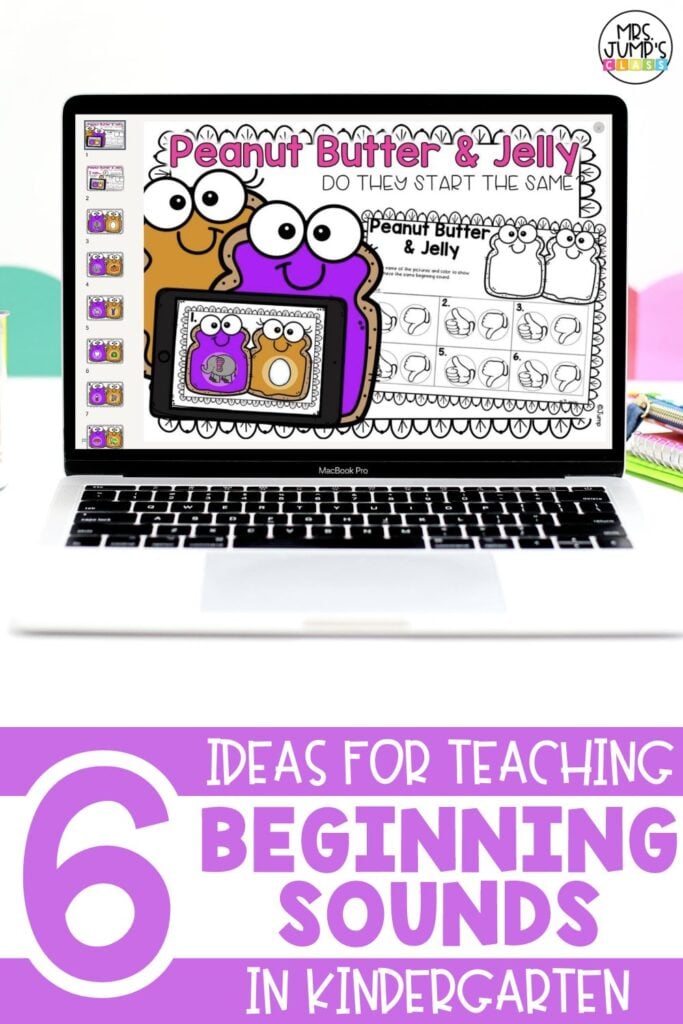
In order for young students to become skilled readers, they need to have a strong foundation in phonological awareness. One of these early skills is to identify initial sounds in words. In this post, I’m going to share some tips, ideas, and low-prep resources for teaching beginning sounds in kindergarten.
The Importance of Teaching Beginning Sounds
As young kindergarten students begin the journey to becoming skilled readers, one of the first steps is for them to understand that words are made up of smaller units of sound. In order to teach this concept to young children, we often start by focusing on beginning sounds, since they tend to be easier for students to isolate and identify.
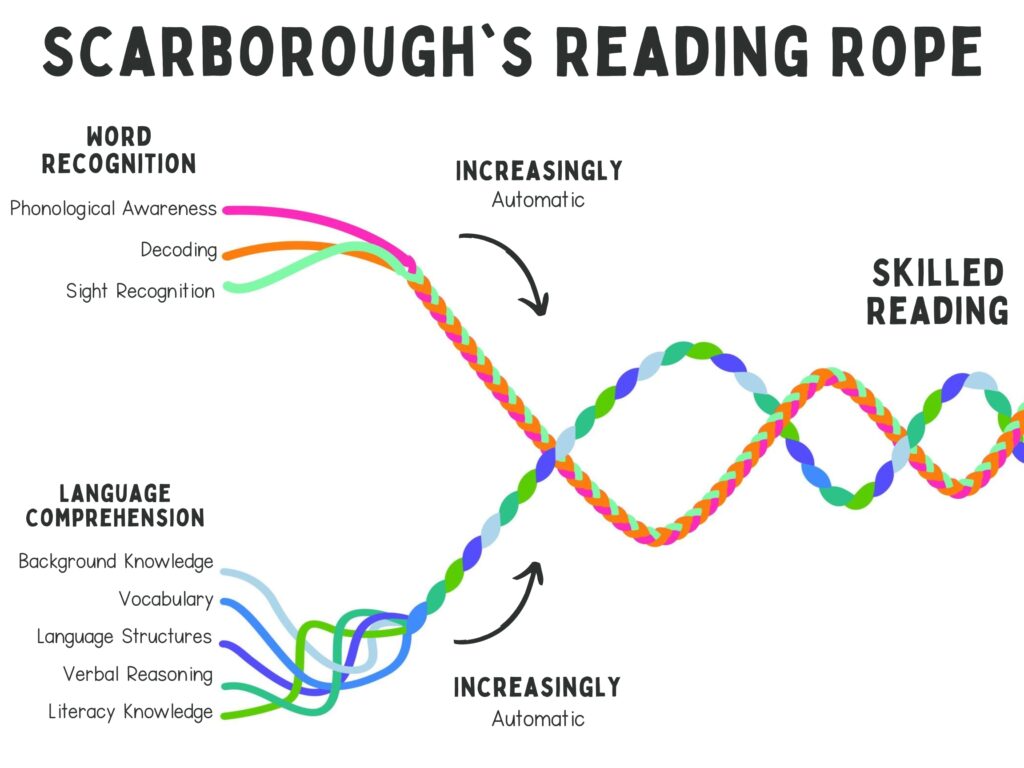
Consistent and regular practice with beginning sounds will help students develop a strong foundation of phonological awareness. The wonderful Reading Rope visual from Hollis Scarborough shows how phonological awareness intertwines with other sub-skills to help students become more skilled and confident readers.
The time spent teaching beginning sounds to young kindergarten students is well spent!
6 Ideas for Teaching Beginning Sounds
As you plan your phonological awareness instruction, here are six different ideas that you can use to break it down into meaningful chunks. These tips and ideas will help your students become more comfortable with isolating and identifying initial sounds in words.
1. Listen for Initial Sounds
One of the first steps students need to take in learning initial sounds is to hear the very first sound in a word. A great way to help students listen for initial sounds is to say several words that start with the same sound, one right after the other.
As students listen to a list of words that start with the same sound, they will begin to hear the pattern. You can invite them to add to the list of words by saying another word that fits the pattern. Once students have gotten the hang of it, you can explain that all of these words begin with the same sound.
2. Compare Initial Sounds
Another great way to help students identify beginning sounds is to have them listen for similarities and differences between two words. For example, students can look at two pictures, say the words, and then decide if they start with the same sound. At this point, students don’t have to worry about the letters; they are just listening for the initial sound and deciding if two words match.
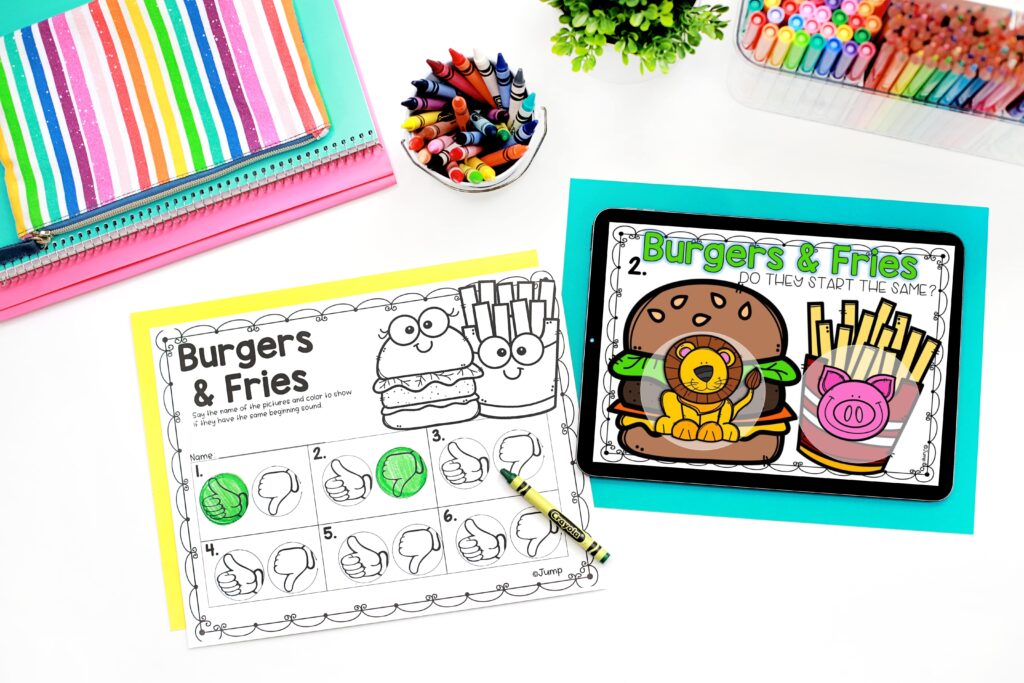
This is also an easy skill to practice while students are waiting in line. You can say two words and have students give you a thumbs up or a thumbs down if they have the same beginning sound.
3. Sort by Initial Sounds
Picture sorts can be another great way to practice initial sounds with your kindergarteners! They can put pictures in groups based on the sound they hear at the beginning of the word. This activity could focus on one specific sound, so the students are sorting the pictures based on whether they start with that sound. They could have a group for “yes” and a group for “no”. Another option could be to sort pictures for two sounds at a time; students would have a group for each sound.
4. Matching Beginning Sounds to Letters
As students begin to associate sounds with written letters, you can incorporate these letters into your beginning sound practice. For example, you might hold up a letter card and have students identify something in the room that starts with that letter’s sound.
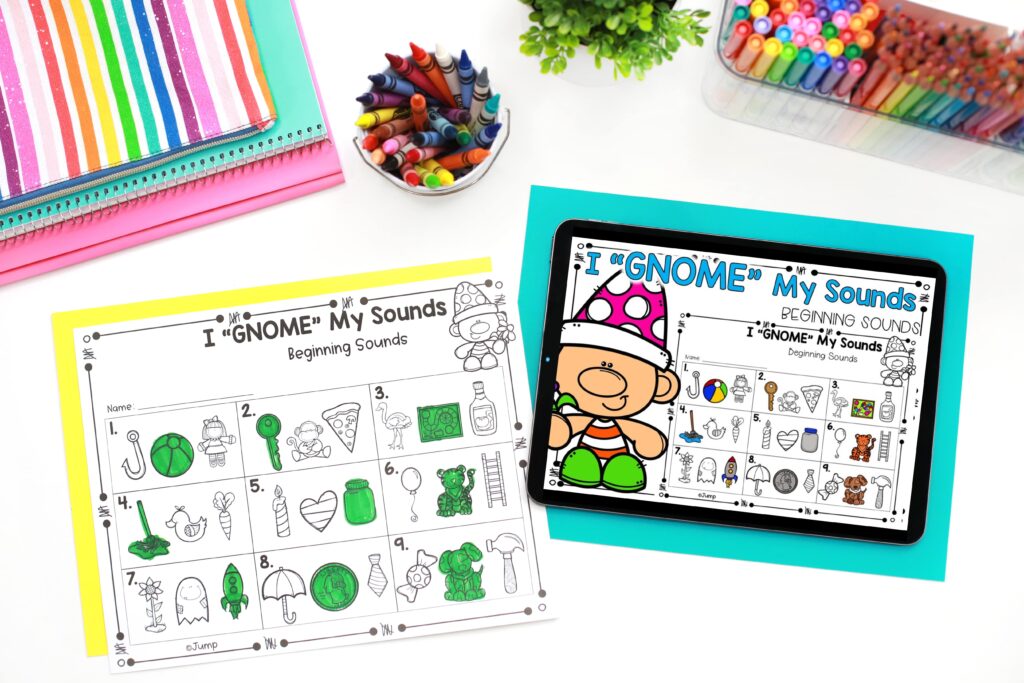
This digital activity is another great way to practice identifying beginning sounds by letter. After looking at a letter on the digital slide and identifying the sound it makes, students can choose a picture that matches the sound and color it in on their response sheet.
5. Listen for a Specific Letter’s Initial Sound
Another way that students can become more familiar with letter-sound relationships is to practice listening for a specific letter’s initial sound.
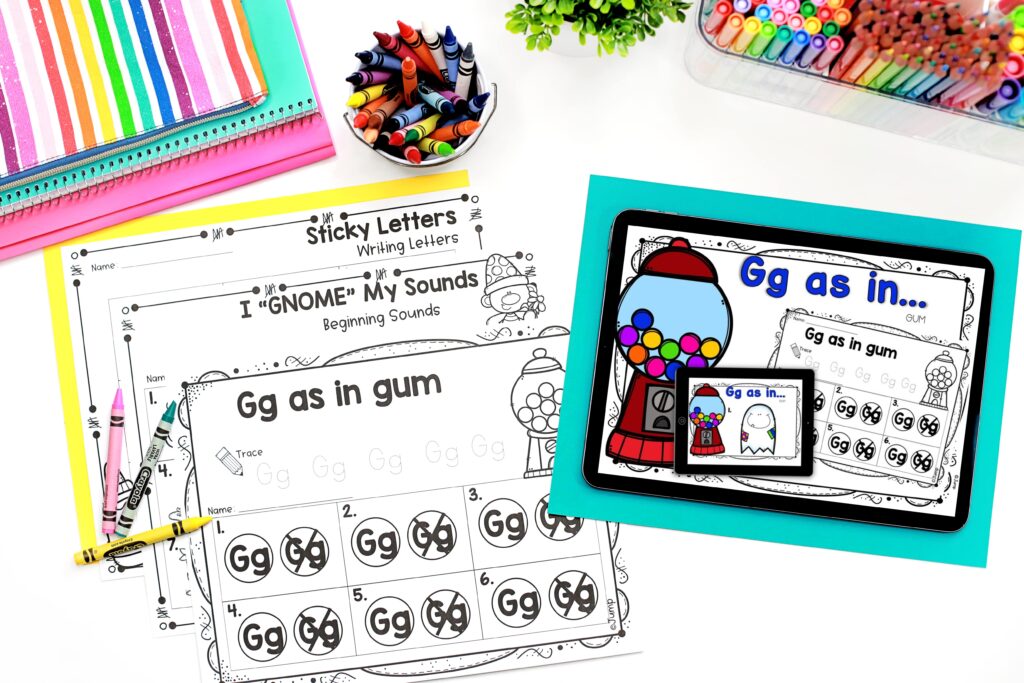
For example, in this digital center activity, students will listen for /g/ at the beginning of words. As they look at the picture on each slide, they will determine if that picture begins with the letter Gg. They can color in the response sheet to answer yes or no.
6. Write Beginning Sounds
Finally, students can put their knowledge together by writing the letter that matches a beginning sound. First, students can look at a picture and say the word. Then they will isolate and identify the beginning sound in the word. Next, they will think about what letter represents that sound. Finally, they can write the uppercase and lowercase letters on a response sheet.
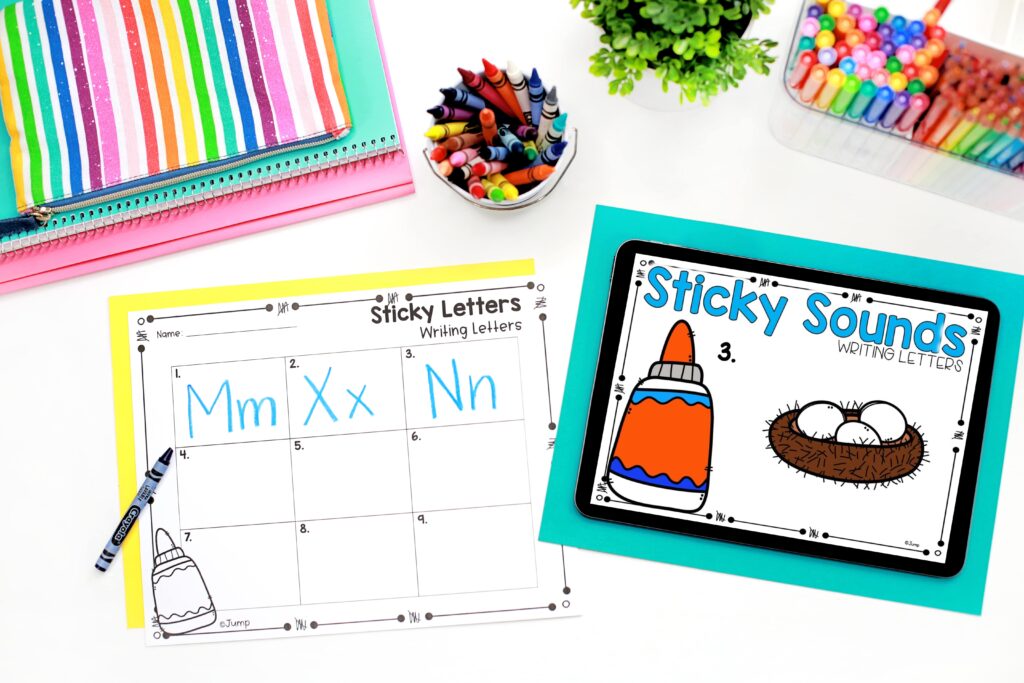
This is such a great way for students to put together everything they have learned about initial sounds while practicing important fine motor skills!
Digital Beginning Sounds Centers
I have put together a set of Digital and Print Centers that will help your students get more repetition and practice with initial sounds using the strategies from this post. These low-prep activities are great for literacy centers, small group work, RTI groups, or morning work. All you need to do is upload the PowerPoint presentation to Google Slides, print the response sheets, and the students are ready to start learning!
Students will tap through the slides and fill out their response sheets according to the prompt on the digital activity. These digital centers are perfect for independent practice because each activity has an answer key at the end so students can check their work when they are finished.
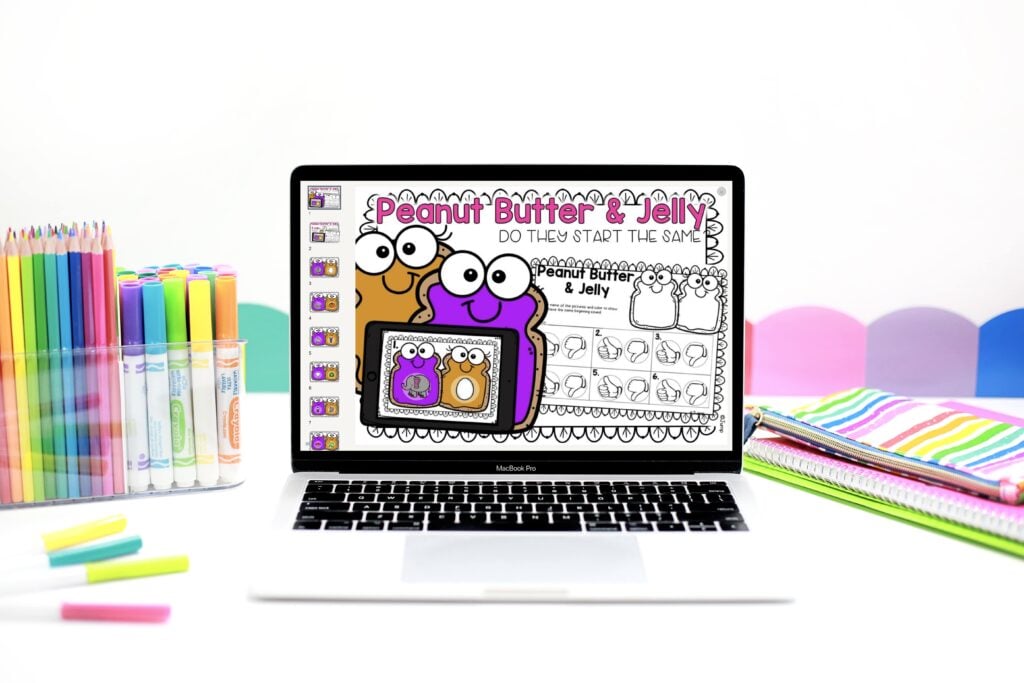
Would you like to take a closer look at all of the different ways that your students can practice beginning sounds with these centers? Just click to find this resource in my TPT store.
Save These Tips for Teaching Beginning Sounds
Be sure to save this post if you’d like to come back to it later! Just add the pin below to your favorite teaching board on Pinterest. You’ll be able to quickly find these tips and resources for teaching beginning sounds when you’re working on your literacy lesson plans.