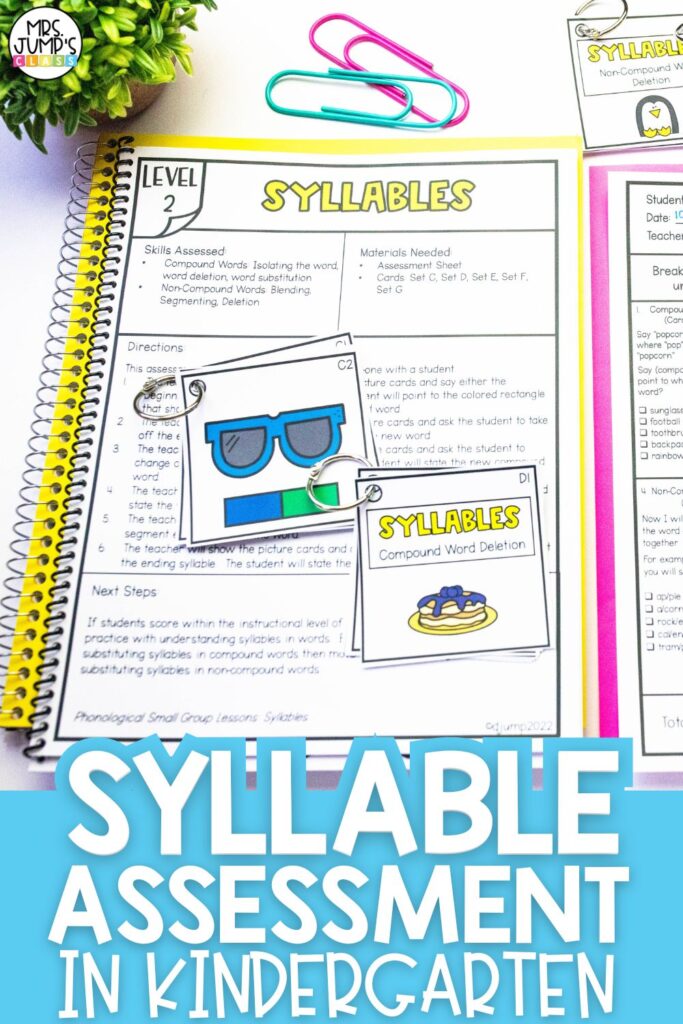
It is amazing to think about the speed at which kindergarten students develop foundational literacy skills. At the heart of this progress is research-based, data-driven instruction. In this post, I’m going to share some tips for gathering data for instructional planning by using syllable assessment in kindergarten.
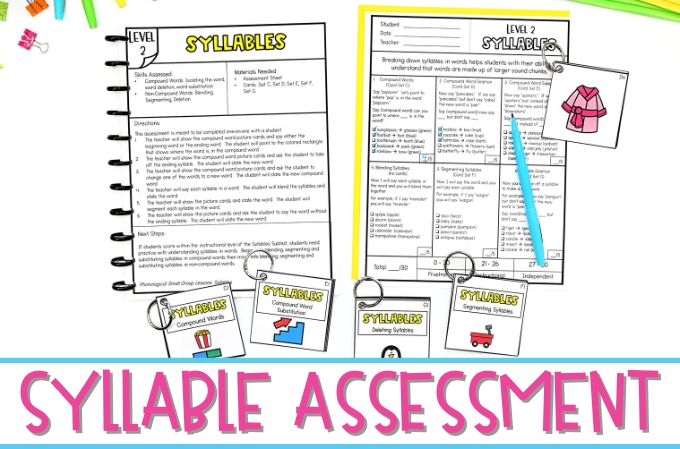
The Importance of Understanding Syllables
It is very important for early elementary students to understand that words are made up of smaller chunks (syllables). This is a prerequisite for understanding that words are made up of individual sounds (phonemes). All of this knowledge will help students develop strong phonological awareness skills.
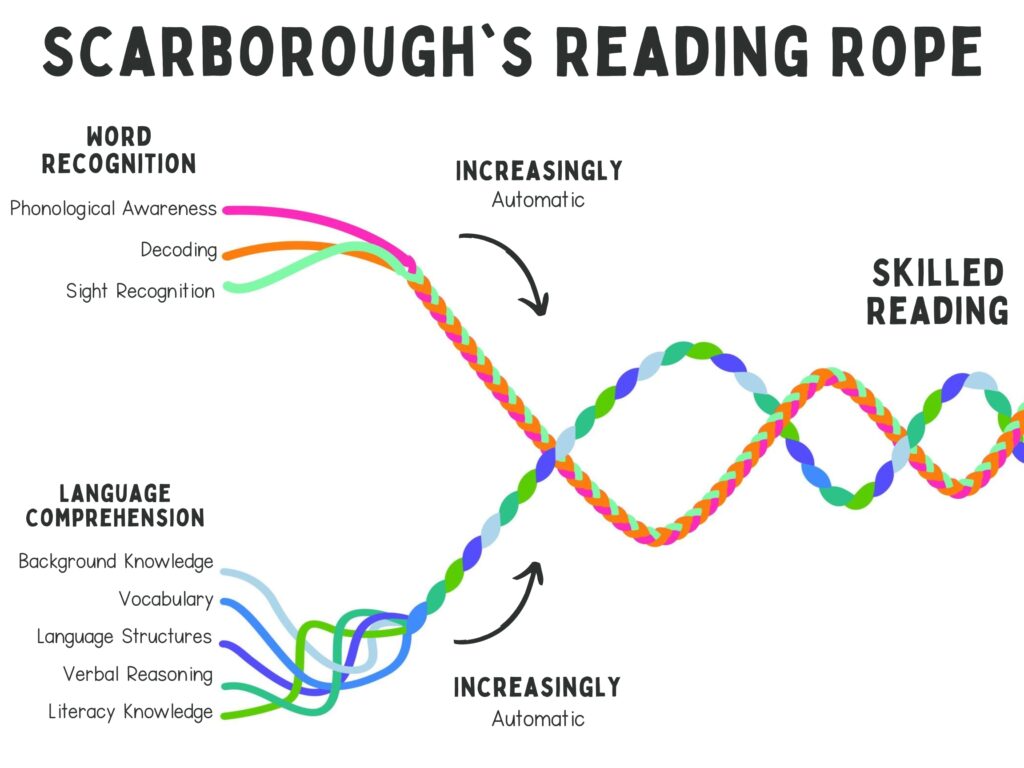
If you are familiar with Hollis Scarborough’s Reading Rope, you have likely seen the visual representation of how phonological awareness is a vital component of learning how to read. These skills intertwine with other reading sub-skills in order to help students become skilled readers. Effective assessment will help you determine how best to support the development of these skills.
Tips for Syllable Assessment in Kindergarten
1. Complete the Assessment One-on-One
While informal check-ins can be helpful during whole group instruction, it’s important to assess students individually to get a better idea of how they understand syllables. Hearing how students can break down words into their sound chunks will help you plan their instruction and identify specific skills to target. You’ll be able to see patterns in their responses that are easy to miss without sitting down with them one-on-one.
2. Use Visual Supports
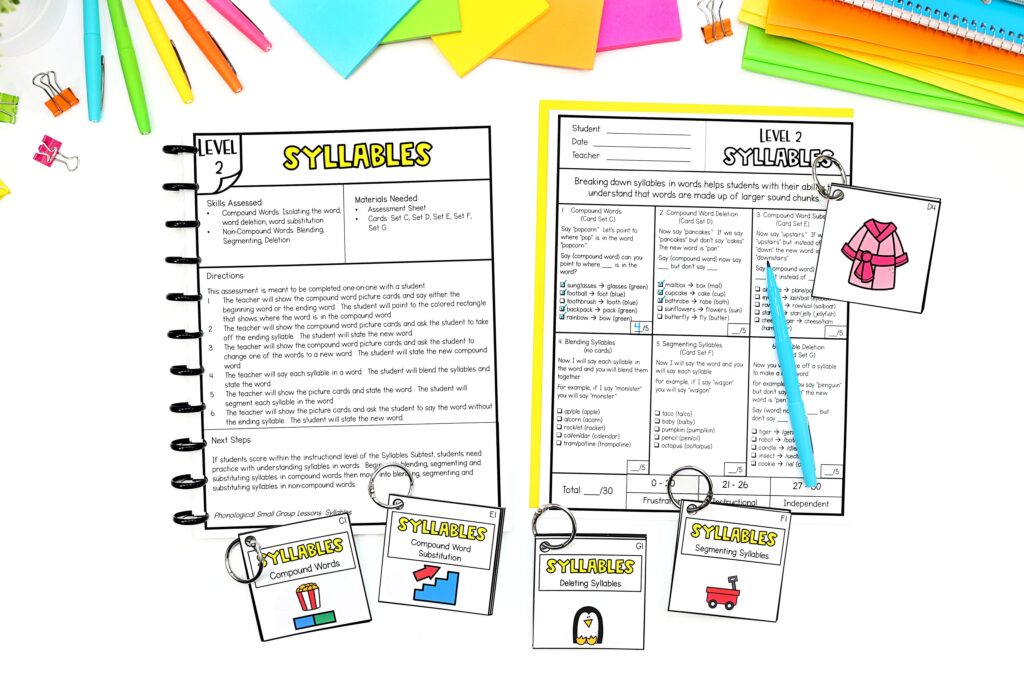
While a phonological awareness assessment for syllables is mostly verbal, it can be very helpful to have visuals on hand. While they are great for keeping young students engaged and attentive to the task at hand, they can also serve an additional purpose in the assessment. You can print off the pictures, laminate them, and put them on binder rings for easy access.
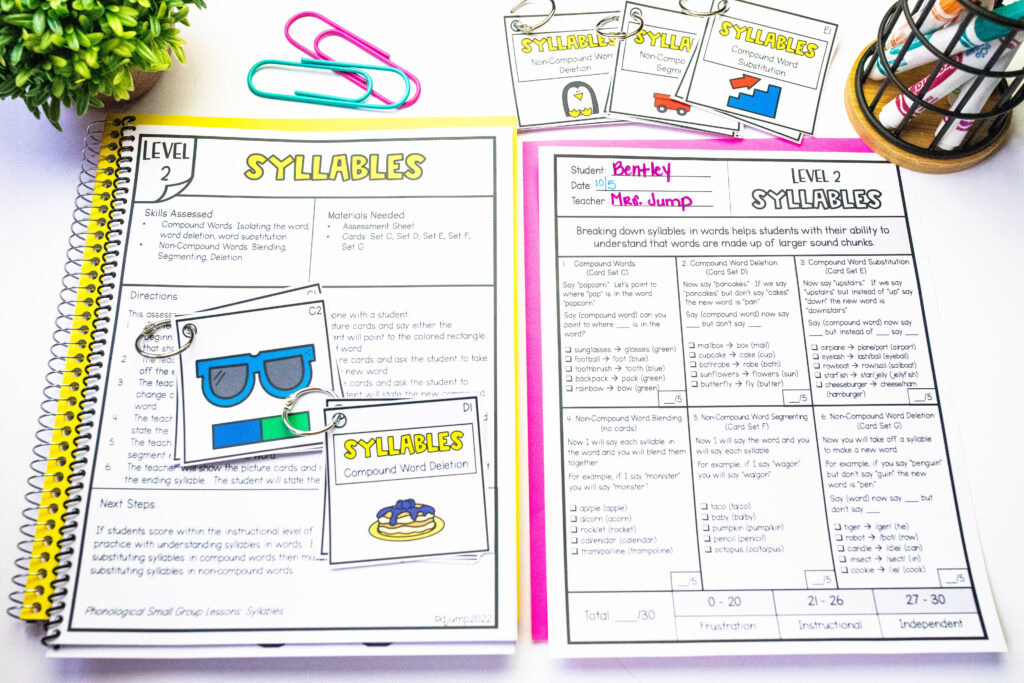
When you think about a syllable assessment, you want to know if students are able to break a word into its chunks. If they aren’t able to hear and process the word you’re saying, they won’t be able to demonstrate their understanding of syllables. Whenever it’s appropriate for the specific assessment, a visual can help students focus more on the actual task and less on whether or not they heard the word correctly. When they have a picture in front of them to confirm the word they just heard you say, it can also help them respond with more confidence!
3. Go Beyond Clapping
It’s common to think of clapping out syllables in a word when you hear “syllable assessment”, however a phonological awareness assessment that focuses on syllables should go beyond clapping. There are many individual skills that, when assessed together, can give you a better picture of how your students understand syllables:
Compound Words
Can students identify the parts of a compound word? One way to assess this is with a picture card that contains two colored squares. The picture on the card represents a compound word. You can say one part of the compound word and the student will indicate if that part is at the beginning or the end of the compound word by pointing to the corresponding colored square.
Compound Word Deletion
Students can continue to work with compound words by saying a compound word without a specified part. For example, you would direct the student to say “pancake” and then ask them to say “pancake” without “cake”. The student would respond with “pan”.
Compound Word Substitution
This skill is another way for students to show their understanding of word parts. Students will repeat a compound word and then replace part of the word with a new word. For example, you might ask a student to say “upstairs”, then direct them to say it again but saying “down” instead of “up”.
Blending Syllables
Syllable blending is a helpful foundational skill for blending phonemes. You can see see where your students are at with this skill by saying two syllables and then having them blend the syllables to form a word. It’s helpful to use words that aren’t compound words for this assessment.
Segmenting Syllables
Again, segmenting syllables will prepare your students for segmenting individual phonemes. You will say the word and the student will say the syllables. It’s vital for students to be able to break down words into smaller chunks for tasks like writing. This helps them write with more confidence!
Syllable Deletion
Finally, you can see if your students are able to manipulative individual syllables. This can be a more challenging task for students, since the syllables aren’t complete words like they are in a two-syllable compound word. Once they have broken the word into its syllables, they will remove the syllable as directed and then verbally say the remainder of the word out loud. For example, the student might be directed to say “penguin” without “guin”. They would respond with “pen”.
4. Plan Targeted Instruction
One of the most important parts of administering an assessment is to use the data that you’ve collected. You can identify patterns among your students, looking for specific skills that you can target with small-group phonemic awareness instruction.
Printable Syllable Assessment for Kindergarten
Would you like to see where your students are at with this foundational literacy skill? I have put together a set of phonological awareness assessments that includes a syllable assessment!
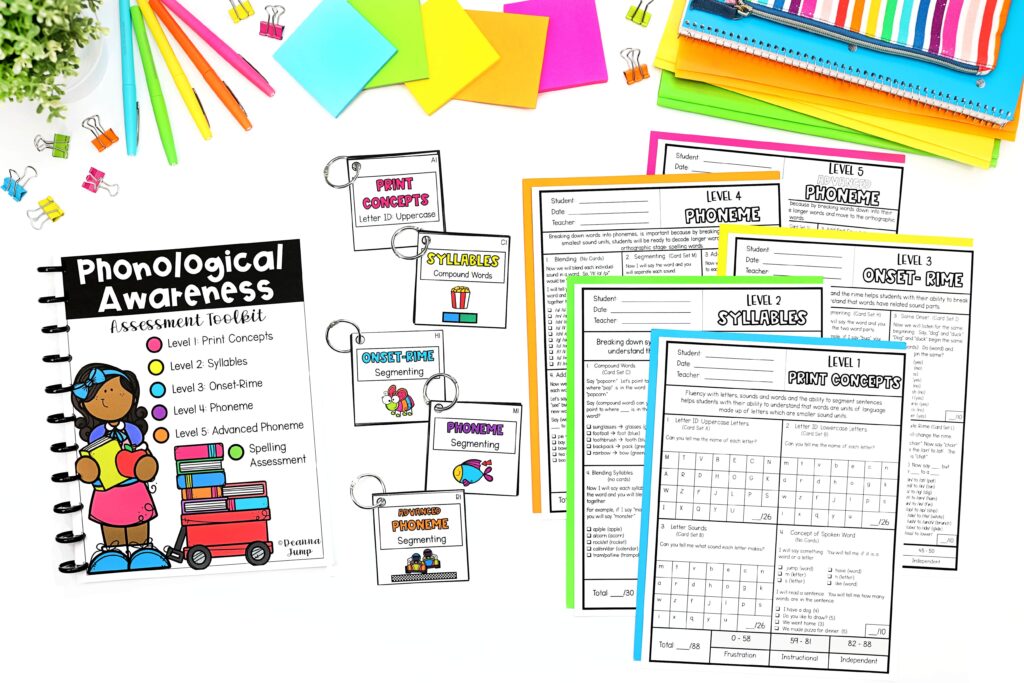
You’ll find coordinating picture cards to keep your students engaged in the assessment, along with all of the data collection sheets and detailed instructions you’ll need. These assessments are designed to be easy to administer so you can collect the data you need and move on to planning your instruction.
If you’d like to take a closer look at all of the phonological awareness skills addressed with this assessment tool, you can find it in my TPT store.
Save These Tips for Assessing Syllables in Kindergarten
Be sure to save this post so you can come back to it later! Just add the pin below to your favorite early elementary literacy board on Pinterest. You’ll be able to quickly find these tips and assessments when you’re ready to plan your phonological awareness instruction.